
Electrical safety
Electrical fire risks every Rockingham homeowner should know about
Most of it develops slowly, behind a wall or inside a switchboard, and gives you warning signs long before it gives you a fire.
Electrical fires rarely announce themselves. They develop behind walls, above ceilings and inside switchboards, in places nobody looks at between one property inspection and the next, and the warning signs are quiet enough to live with for years.
Electrical faults and appliances are consistently among the leading causes of residential fires in Australia, and a large share of those are preventable with straightforward maintenance. Knowing what to watch for is most of the protection.
Why it builds up slowly
A loose connection, a deteriorating cable, an overloaded power board or an old switchboard all do the same thing: they generate heat they were never meant to generate. Heat degrades insulation, degraded insulation increases resistance, and resistance makes more heat. It is a slow loop, and it runs for a long time before anything visible happens.
Meanwhile the load keeps increasing. Air conditioning, a home office, entertainment systems, pool equipment and car charging all landed on wiring that was designed for a house with a fraction of that demand.
Overloaded circuits and power boards
The classic. Double adaptors stacked into power boards, a heater and a kettle on the same circuit, and an extension lead doing a permanent job it was sold for a temporary one.
The signs are a breaker that trips when two particular appliances run together, a plug or power board that is warm to the touch, and outlets that have discoloured around the pins. None of those are things to live with.
Ageing or damaged wiring
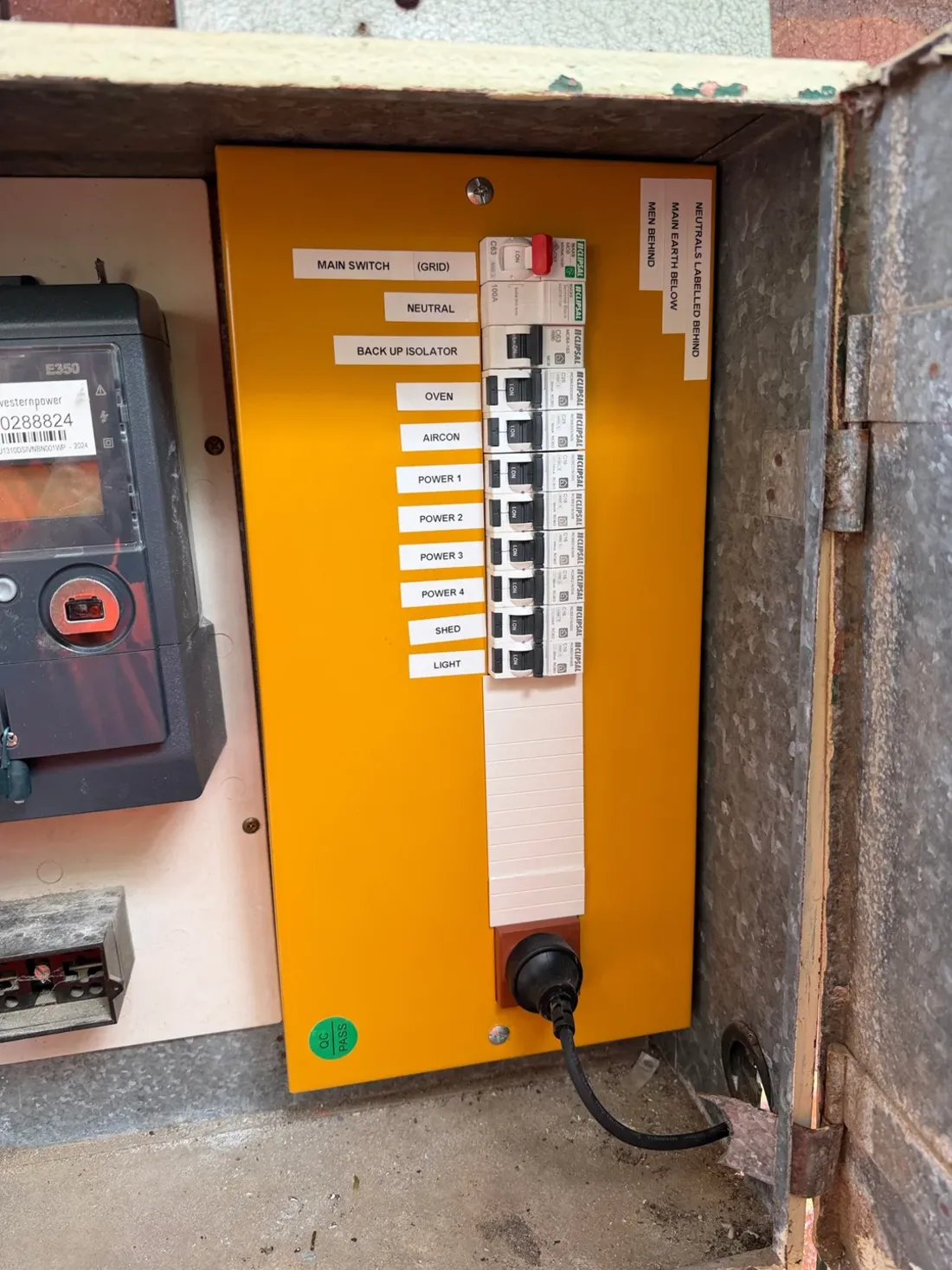
Older Rockingham homes can still carry wiring installed for a very different set of appliances, and previous do it yourself work turns up more often than anyone would like. Perished insulation, loose terminations and joins made in places they should never have been made are all invisible until somebody opens something up.
Listen for buzzing behind a wall or a switch plate, watch for lights that flicker on a particular circuit, and treat any sparking outlet as a job for today rather than next month.
Faulty appliances and damaged leads
Chargers, kettles, heaters, extension leads and the cord on anything that gets dragged around. Frayed insulation exposes conductors, and a cracked plug does the same thing where you cannot see it.
Watch for sparks when you plug something in, appliances or plugs running unusually hot, cracked plugs, frayed cords, and any burning smell during operation. Replacing a damaged lead is the cheapest electrical work you will ever do.
Lithium ion batteries and charging
Phones, laptops, tools, scooters and e-bikes have put a lot of lithium ion cells in Australian houses, and fire services have recorded a steady rise in incidents involving them. The precautions are simple: use the manufacturer's charger, do not charge on a bed or a couch, do not leave things charging unattended overnight, and stop using anything that gets hot, swells or has been dropped hard.
What the coast does to electrical fittings
Rockingham's salt air is hard on anything outdoors. Salt and humidity accelerate corrosion on terminations, fittings and enclosures, and a corroded connection is a high resistance connection, which is a heat source.
Outdoor lighting, garden outlets, pool equipment, air conditioning isolators and rooftop solar isolators are the usual casualties. They are also the ones nobody inspects, because they are outside and they are still working.
What to do about it
Most of this is preventable and most of it is cheap to prevent. If you have noticed any of the warning signs above, or if it has been years since anyone looked at the switchboard, that is the job. We test rather than guess, tell you what is urgent and what is not, and point out anything unsafe we notice whether or not you deal with it today.
FAQs
Questions on this
What does an electrician actually check for fire risk?
The switchboard and its terminations, RCD operation tested with an instrument rather than the test button, circuit loading, the condition of accessible wiring and outlets, and outdoor fittings. Anything found gets explained in plain terms with a price before it is done.
Can an electrical fire start when nobody is home?
Yes. Faulty wiring, overloaded circuits and failing appliances do not need anybody present, which is exactly why the slow warning signs are worth acting on.
When should I call someone?
Burning smells, warm or discoloured outlets, repeated tripping, buzzing behind a wall, or any visible damage to wiring. Any one of those is worth a call rather than a wait.
Get a quote
Noticed any of these at home?
Ring us and describe what it does and when. The pattern is usually enough for us to tell you how urgent it is.