Solar
Common causes of reduced solar output in Rockingham homes
Production drifting down is normal. Production dropping is a fault, and there are five usual culprits.
A solar system that is quietly producing less than it should does not announce itself either. There is no alarm. There is a bill that is higher than you expected, and by the time you notice the pattern it has usually been going on for a while.
Output does move around on its own, so the first job is separating normal variation from an actual fault.
What is normal and what is not
Generation follows the season. Shorter days and lower sun angles mean winter output is meaningfully below summer output on the same system, and a cloudy fortnight will show up clearly. That is expected.
What is not expected is a decline compared with the same month last year, a sudden step down, or one string producing noticeably less than its twin. Those are faults, and your monitoring will show them if anybody looks.
Salt, dust and droppings on the glass
Rockingham is coastal, and salt carried in on the sea breeze builds a film on panel glass that rain does not fully clear. Add dust, bird droppings and leaf litter and you have a layer that costs output without ever looking dirty from the ground.
Coastal arrays need looking at more often than inland ones for exactly this reason. A clean is part of an annual health check, and if the array is already clean we will tell you that rather than go through the motions.
Shading that was not there when it was installed
Trees grow. Neighbours build. A patio goes up, a new antenna goes on, and a system that was designed with a clear roof now has a shadow crossing it for two hours every afternoon.
Partial shading costs more than it looks like it should, because of how strings behave when one part of them is shaded. Worth walking the property and looking at the roof from the ground at different times of day, particularly after tree growth or any building work next door.
Heat
More heat does not mean more power. Panels are rated at a cell temperature well below what a Perth roof reaches in February, and efficiency falls as they get hotter. A very hot, clear day can produce less than a mild, clear one.
That effect is temporary and mostly unavoidable, although mounting height and airflow under the array make a measurable difference and are worth getting right at install.
The inverter
The inverter is the single point everything passes through, and inverter faults account for a large share of solar system failures. When one develops a problem, output can drop sharply or stop entirely, and the only sign might be an error code on a screen in the garage that nobody has looked at since handover.
Check it. Error messages, frequent shutdowns, alerts in the monitoring app, or a production figure that does not match the weather are all worth a call.
Ageing components, especially outside
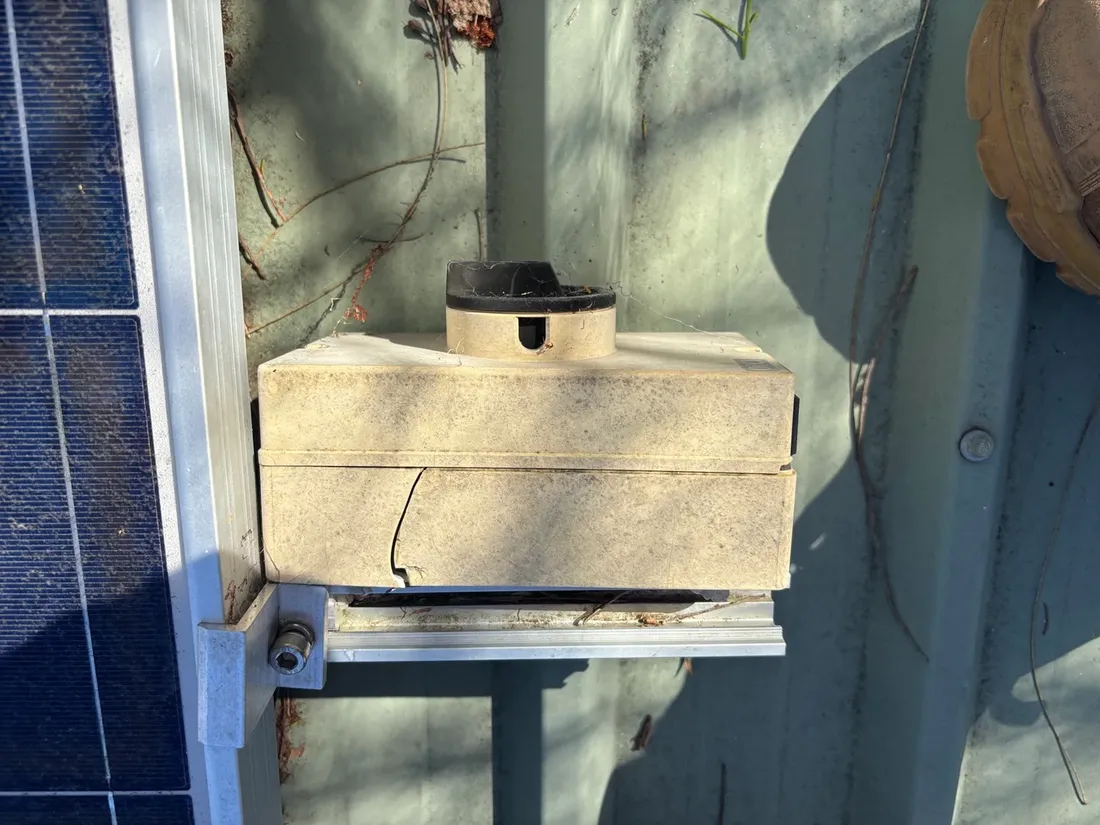
Panels degrade slowly by design. The parts that fail early are the ones exposed to weather: isolators, connectors, cable glands and enclosures. Rooftop DC isolators are a known weak point, and UV and salt air together crack the enclosures and let water into them.
That is a safety issue as much as a production one, and it is invisible from the ground. It is one of the specific things we look at on a health check.
Getting the output back
Most reduced output is not a major failure. It is a dirty array, a new shadow, a tired isolator or an inverter fault nobody noticed. Finding out which costs far less than a year of quietly buying power you should have been generating.
FAQs
Questions on this
How often should a solar system be inspected?
Annually for most homes. More often if you are close to the coast, where salt accelerates both the film on the glass and the corrosion on outdoor fittings.
Can I clean the panels myself?
From the ground with a soft brush and water, on a cool part of the day, yes. Getting on a roof to do it is not worth the risk, and abrasives or harsh cleaners can damage the anti-reflective coating.
Does rain clean the panels?
Partly. Rain shifts loose dust and does very little to salt residue or bird droppings, which is why coastal arrays still need attention.
Get a quote
Bill higher than it should be?
Book a health check. You get the roof, the isolators, the inverter and the switchboard looked at, and a written report with the photos.