
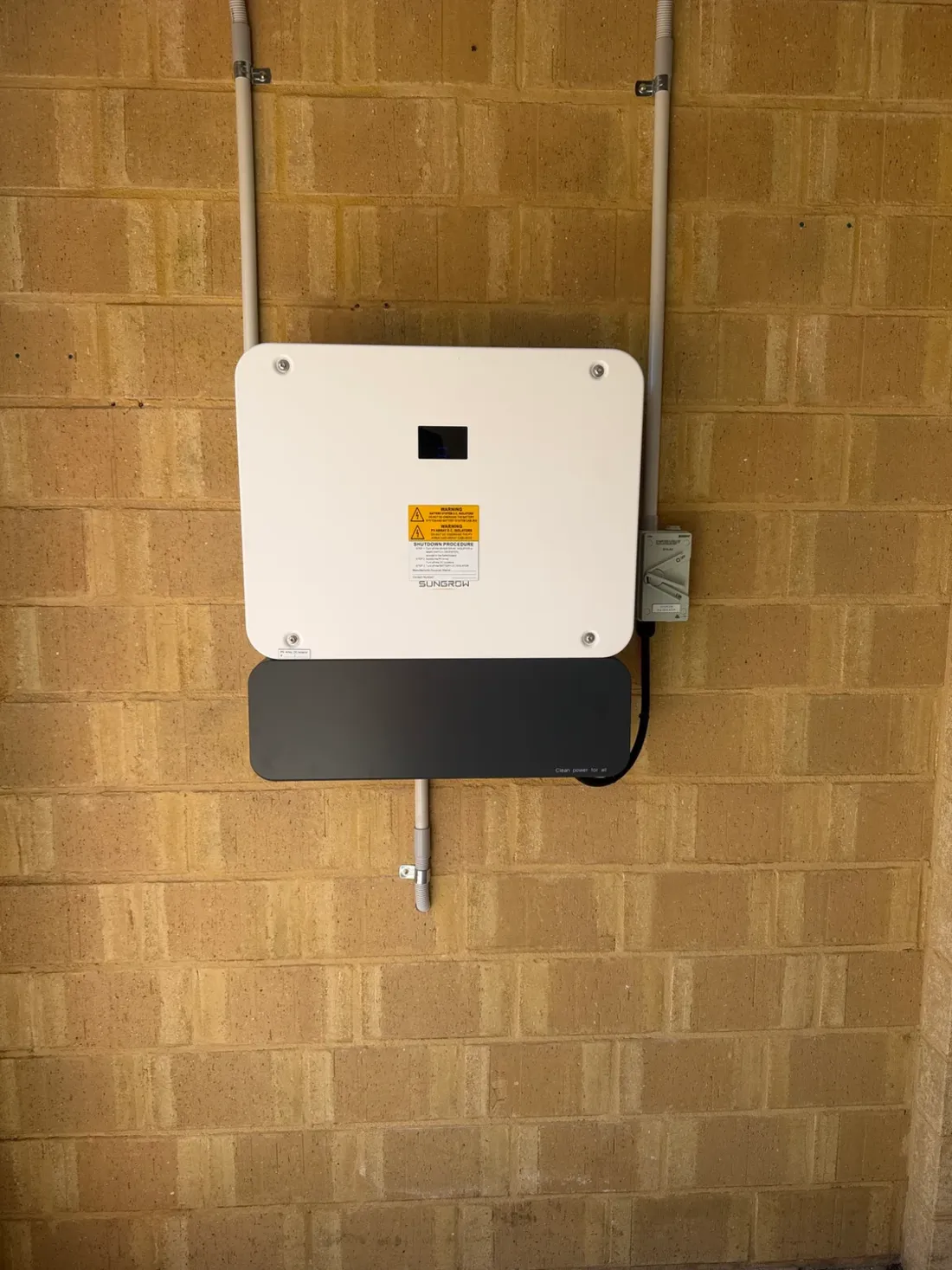
Batteries
What affects solar and battery prices in Perth
Why two quotes for the same house come back thousands apart, and which of the differences are real.
If you have collected a few quotes for solar and battery storage, the first thing you will have noticed is that no two of them agree. That is not always a sign that somebody is overcharging. More often it is a sign that the quotes are not describing the same job.
Here is what actually moves the number.
Capacity, and whether you will use it
Storage capacity is one of the largest single line items, so it is the first thing that separates two quotes. A larger battery costs more and stores more, and neither of those facts tells you whether it is right for your house.
What decides that is your own pattern: how much surplus solar you have to store, and how much power you draw after the sun goes down. A household running air conditioning, an oven and hot water in the evening has a genuine use for more storage. One that is quiet after dinner does not, and pays for capacity it never cycles.
Compare usable capacity rather than the headline figure, and be wary of any capacity recommended before somebody has looked at your consumption. We assess that on site.
Technology and warranty
Two batteries with similar capacity can be priced very differently, and the difference usually sits in efficiency, cycle life, warranty terms, monitoring and expected service life rather than in the badge.
A higher price with a stronger warranty and a better throughput allowance can be the cheaper option measured over the life of the system. CSIRO's GenCost work has battery costs continuing to fall year on year as the technology matures, which is good news for anyone buying now and a reason to compare on total value rather than on the lowest quote in the pile.
What is already on your roof and in your switchboard
If you have existing solar, the battery has to work with it. Your inverter, switchboard, cabling, available space and the condition of the existing installation all get checked before anything is recommended, because any one of them can add work to the job.
An older inverter that will not support your chosen battery is the most common example. So is a switchboard with no room left in it. Neither shows up in an online price, and both show up on the invoice, which is why one quote can look cheaper right up until the point where somebody discovers what the first installer left out.
Installing solar and storage together usually avoids some duplicated electrical work compared with adding the battery later. Whether that makes it the better decision depends on your situation, not on a rule.
Backup changes the job, not just the price
Keeping your house running through a blackout is a separate piece of work with separate equipment. Standard battery storage and backup are not the same thing, and a quote that includes backup is not comparable with one that does not.
Decide what you actually want running. The fridge, lights, internet and a handful of outlets is a straightforward ask. Ducted air conditioning or electric hot water through an outage is a considerably larger one, and it is constrained by the battery's power output rather than its capacity.
The incentives you qualify for
Federal and Western Australian support for battery storage both exist, and both have eligibility and equipment conditions that not every installation meets. The Commonwealth scheme discounts eligible small scale batteries installed with new or existing rooftop solar. Western Australia runs its own residential battery scheme on top of it, with rebate amounts that differ depending on whether you are a Synergy or a Horizon Power customer, and a no interest loan option for households that qualify.
We do not print the current figures here, because scheme values and eligibility rules change and a stale number on a web page is worse than no number at all. We confirm what applies to you at quote stage and show it as a line item with the amount already deducted, rather than leaving you to chase it afterwards.
Compare the system, not the sticker
When you line quotes up, compare them on:
- Usable capacity, not headline capacity
- Efficiency and expected service life
- Warranty terms, including throughput limits
- Inverter compatibility and whether the existing one is staying
- All electrical work, including the switchboard
- Whether backup is included, and what it covers
- Monitoring and how you will actually see what the system is doing
- Which incentives have been applied, and whether you qualify
- Who does the installation, and who honours the warranty
Done that way, the cheapest quote is often the one with the most missing from it.
FAQs
Questions on this
Are solar batteries worth it?
They can be, if you generate surplus solar during the day and use a meaningful amount of power after dark. If you are exporting very little, or your evening use is low, the payback stretches out. That is an arithmetic question and we will give you the arithmetic rather than an opinion.
Will a battery mean changes to my meter?
Sometimes, depending on your existing metering and how the battery connects. We check that before quoting rather than discovering it on install day.
Is it cheaper to install solar and a battery together?
Doing both at once avoids repeating some of the electrical work and lets the system be designed as one thing. Whether that beats adding storage later depends on your situation, and we will price it both ways if both are sensible.
Get a quote
Comparing quotes?
Send them through with your last power bill. We will tell you plainly what the differences between them actually are.