
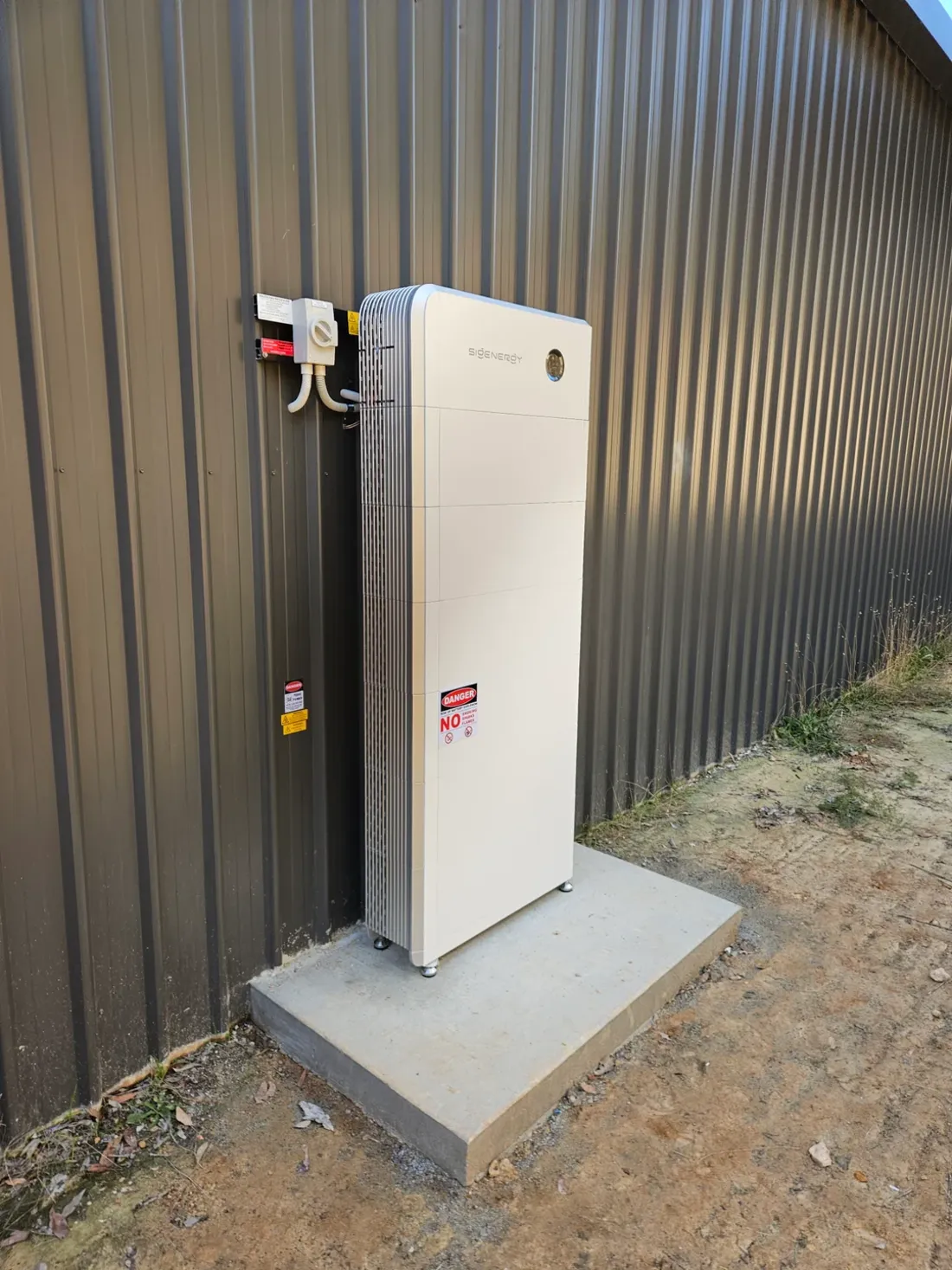
Batteries
Will a solar battery keep the power on in a blackout?
A battery only keeps the lights on in a blackout if it is installed with backup. Here is what that involves, what it will and will not run, and the safety rules.
A home battery only keeps your power on in a blackout if it is installed with backup. Without it, a grid-connected solar and battery system shuts down when the grid does, for the safety of anyone working on the lines. With backup, a changeover device separates your house from the grid and the battery supplies either selected essential circuits or the whole house, depending on how it was wired.
What it can run is limited by two things: how much energy the battery holds, in kWh, and how much power its inverter can deliver at once, in kW. The fridge, lights, internet and a few power points are easy. Ducted air conditioning, an electric oven and electric hot water all at once usually are not.
Why a battery without backup goes dark
Grid-connected inverters must stop supplying power when the grid goes down, so they cannot push electricity into lines that line workers believe are dead. Unless the system has a way to disconnect the house from the grid first, the safe behaviour is to shut down, battery and solar included. This catches people out in their first outage after buying a battery, so ask the question before you buy rather than after.
Essential circuits or whole home
Essential-circuit backup moves selected circuits onto a backed-up section of the switchboard, usually the fridge, lights, internet, some power points and perhaps a bore pump or garage door. Everything else goes off in an outage. It is simpler, it stretches the battery further, and it stops one heavy load tripping the backup.
Whole-home backup keeps every circuit available. It is more convenient, but the inverter has to cope with whatever the house asks of it, so it usually needs a larger inverter or battery and more switchboard work. Even whole-home systems are often set up to keep the biggest loads off during an outage.
Either way, backup goes in through a backup gateway or changeover device that isolates the house from the grid before the battery takes over. It is switchboard work, and it must be done by a licensed electrician.
How fast backup kicks in
It varies by system. Some switch over fast enough that most appliances carry on and you barely notice. Others take a few seconds, which is enough to reset clocks and restart computers and modems. Some batteries only offer a single backup outlet rather than backed-up circuits. Ask what yours does, and see it tested. We test the backup before we leave a battery job.
What a battery can and cannot run
Usually fine on backup, within the inverter's rating:
- Fridges and freezers
- Lights, ceiling fans, TVs and phone chargers
- The modem and internet
- Gas hot water and gas heaters that need power for ignition and controls
- A small bore or pond pump
Often a problem:
- Ducted refrigerated air conditioning
- An electric oven and cooktop at the same time
- Electric storage or instant hot water
- Pool pumps and heat pumps
- EV charging
Starting current is the trap. Motors, compressors and pumps draw several times their running power for a moment as they start, and that can overload a backup inverter that copes with them happily once they are going.
Recharging matters too. Some systems keep the panels running during an outage and top the battery up in daylight. Others do not, and once the battery is empty you wait for the grid. Over a long outage that difference is large.
Perth Hills and semi-rural properties
Homes in the Hills and on semi-rural blocks are often at the end of long overhead lines through trees, where storms and fire season can mean longer outages than in the suburbs. On a property with a bore or a septic pump, losing power means losing water and wastewater handling, not just lights. For those homes backup is often the main reason for the battery, so size it for a long night on essentials and make sure the solar can recharge it in the day. See the 20 kWh and 30 kWh battery pages, and our guide to sizing a battery.
If you join a VPP
The WA battery rebate requires you to join your retailer's virtual power plant, which can draw on your battery at times of high demand. If backup matters to you, ask how much charge is kept back for your own use. See Synergy's battery VPP explained and the WA battery rebate guide.
Portable power stations are a different thing
A portable power station is a battery in a box with power points on the front. You plug appliances straight into it. It is not connected to your house wiring, it cannot back up a circuit, and its capacity is usually small. It is handy for camping, or to keep a modem and phones charged. It is not a home battery, and it must never be connected to a power point or the switchboard to feed the house.
Safety: never backfeed the house
Do not run a generator or power station into the house through a lead plugged into a power point. A double-ended lead makes the exposed pins live, can send power back into the street, and can kill you, a neighbour or a line worker. If you want a generator as part of your backup, it needs a proper inlet and changeover switch installed by a licensed electrician. All backup wiring is fixed electrical work, which in WA only a licensed electrician may do.
When the power goes, check the Western Power outage map or ask a neighbour first. For fallen lines or a network fault, call Western Power on 13 13 51. For fire or electric shock, call 000.
If you want backup designed properly, start on our battery storage page. Send your last bill and a photo of your switchboard, and we will price essential-circuit and whole-home backup side by side.
FAQs
Questions on this
Will my solar and battery work in a blackout?
Only if the system was installed with backup. Without it, a grid-connected system shuts down when the grid does, so it cannot feed power into lines that workers believe are dead. With backup, a changeover device isolates the house first and the battery takes over.
How long will a battery run my house in a blackout?
Divide the battery's usable capacity by what the backed-up circuits draw. As an example only, 10 kWh feeding a fridge, lights and internet drawing about 0.5 kW would last around 20 hours. Add air conditioning or cooking and it falls quickly. Solar recharging during the day, if your system supports it, stretches it further.
Can I use a generator with my solar and battery?
Only through a proper inlet and changeover switch installed by a licensed electrician. Never plug a generator into a power point with a double-ended lead. It can electrocute you, a neighbour or a line worker.
Is a portable power station the same as a home battery?
No. A portable power station runs whatever is plugged into it and is not connected to your house wiring. It cannot back up circuits, and it should never be connected to a power point or the switchboard to feed the house.
Get a quote
Want backup that works when the power goes?
Send your last power bill and a photo of your switchboard. We will price essential-circuit and whole-home backup side by side so you can choose.