
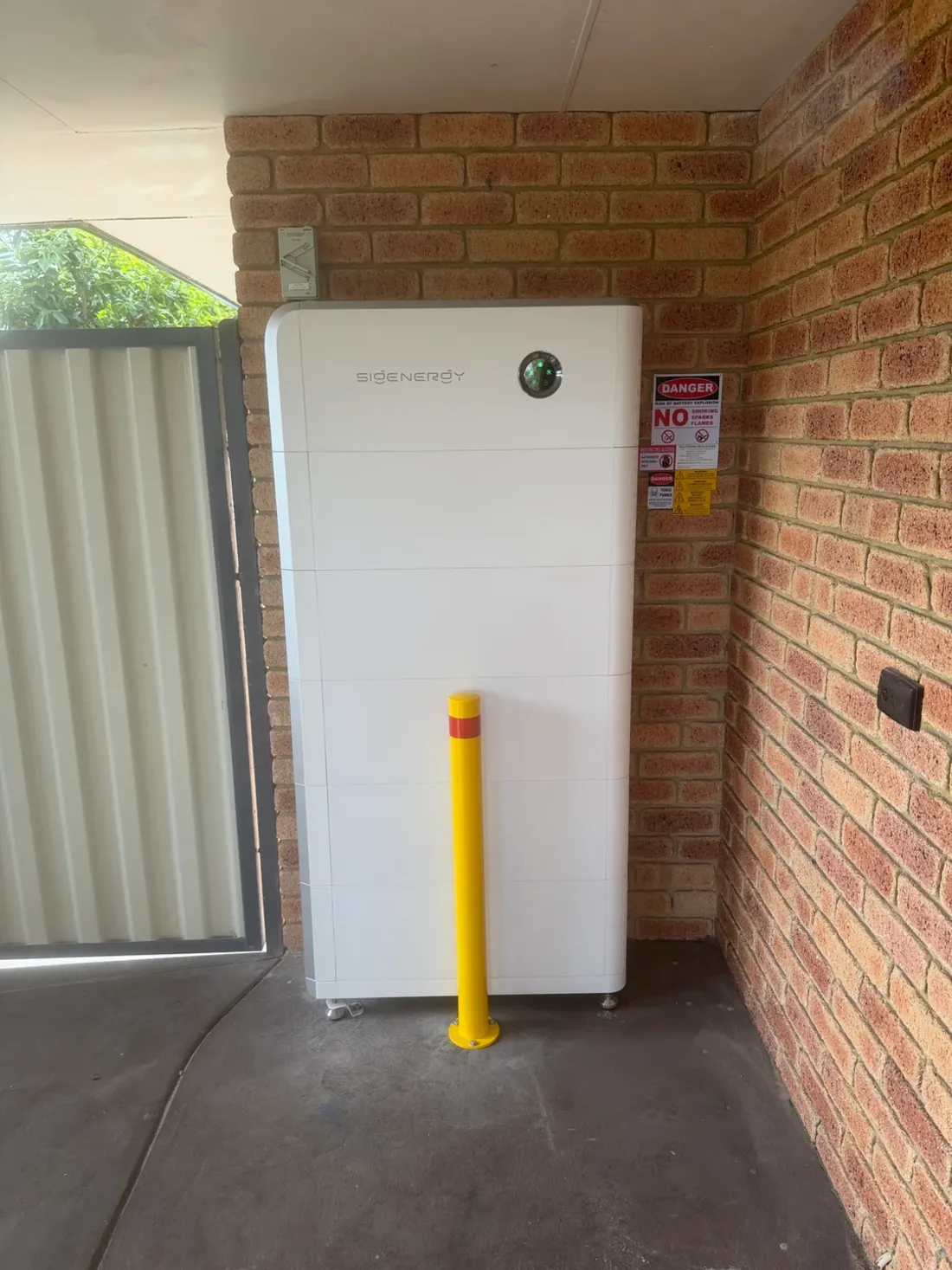
Energy bills
Synergy Battery Rewards and VPPs explained: should you sign up?
The WA battery rebate for Synergy customers comes with a commitment to join Synergy's VPP. Here is what that means and what to ask first.
If you are a Synergy customer and you claim the WA Residential Battery Scheme rebate, you commit to joining a virtual power plant (VPP) offered by Synergy. The rebate is up to $1,300 for Synergy customers, worked out on usable capacity up to 10 kWh, and the battery has to be new, VPP-capable and on Synergy's Supported Solutions List.
A VPP lets your retailer use part of your battery, at times it chooses, to support the grid. Before you sign, find out how much of your battery Synergy can use, when, and what you get back. Those terms are Synergy's to set and can change, so get them from synergy.net.au or from Synergy directly. We do not know the commercial terms of each offer, and we will not guess at them.
How the rebate and the VPP are tied together
The WA scheme sets out the conditions. For a Synergy customer:
- The battery must be new, VPP-capable and on the Synergy Supported Solutions List.
- It must be installed by a vendor listed in the Plenti Vendor Directory. The vendor applies for the rebate on your behalf, and it usually comes off the price up front.
- You commit to joining a VPP offered by Synergy.
- The rebate is up to $1,300, paid on usable capacity up to 10 kWh. Bigger batteries are eligible, but the rebate stops growing at 10 kWh.
- No-interest loans of up to $10,000 are available to households with combined annual income under $210,000. Plenti contacts the applicant.
Horizon Power customers get up to $3,800 and commit to a Horizon Power VPP instead. The federal Cheaper Home Batteries discount is a separate program with its own rules, and it stacks with the WA scheme. Our WA Residential Battery Scheme guide covers eligibility in full.
Ask any installer you talk to whether they are listed in the Plenti Vendor Directory, and check the directory yourself.
What a VPP does, in plain terms
A VPP links lots of home batteries together over the internet so the retailer can run them as if they were one power station. On most days your battery does what it would do anyway: fills from your panels and runs the house in the evening. At certain times the retailer can step in, for example to discharge some of your stored energy into the grid during a demand peak, or to change when the battery charges.
For that to work, the battery has to stay connected to the internet and be set up for remote control. Under the Western Power connection rules from 1 May 2026, adding a battery counts as an upgrade, and the system must be able to be remotely managed through your retailer to take part in an export product such as DEBS. Western Power connection and export limits explains that side.
How Synergy Battery Rewards works
Battery Rewards is the name of Synergy's VPP, and it is the one you commit to when you take the WA rebate as a Synergy customer. According to Synergy's published terms (checked 9 November 2026):
- Synergy can call no more than 30 Battery Rewards events a year, and each one can last up to 6 hours.
- During an event, Synergy can use your battery up to its full capacity.
- You are paid 70 cents per kWh for the energy your battery sends to the grid during an event.
- You cannot choose which events you take part in.
- You need a reliable internet connection, an eligible Synergy tariff, a battery that meets Synergy's technical specifications, and no life support equipment at the home. You cannot be in another VPP at the same time.
The practical point is the full-capacity rule. If an event runs on an evening when you were counting on the battery, it may be partly or fully drained. With at most 30 events a year, that is a trade most households accept for the rebate and the 70c credit, but it is worth knowing before you sign, especially if blackout backup matters to you.
What to ask before you sign up
- How much of the battery can Synergy use? Is part of it always kept for the house?
- When, and how often? Are events limited to certain seasons or times of day, and will you be told in advance?
- What do you get? A credit, a payment, a different tariff, or nothing beyond the rebate?
- How long is the commitment, and what happens if you move house, change retailer or leave early?
- Does it affect your plan? For example, whether you can be on Midday Saver, and how VPP exports are treated against DEBS.
- What happens to backup? If your battery provides backup in an outage, check that a VPP event cannot leave it empty when you need it.
- What does it do to the battery warranty? Many battery warranties have a throughput limit. Ask the manufacturer whether VPP use counts towards it.
Write the answers down. If the terms change later, you will want to know what you agreed to.
What we can and cannot tell you
We can size a battery to your evening use, check a model against the Supported Solutions List, set the system up to meet the 1 May 2026 connection rules, and explain how it will behave day to day. We can also tell you honestly whether a battery is worth it for your house yet.
Beyond what Synergy publishes, we cannot tell you how often events will actually be called or what a year in Battery Rewards will earn you. Those terms belong to Synergy and can change. Anyone who promises you a figure for VPP earnings should be able to show you where it comes from.
Is the rebate worth the commitment?
For most households the battery still spends almost all its time doing its main job: storing midday surplus that would earn 2c on DEBS and using it in the evening instead of buying power at about 33.26c on Home Plan (A1), or about 55.33c in the Midday Saver peak (2026-27 rates, which change each 1 July). The VPP sits on top of that.
Because the WA rebate stops growing at 10 kWh, it pays to size on your own use rather than on the rebate. Some homes are well suited to a 10 kWh battery, others need a 13.5 kWh or larger. What size battery a Perth home needs goes through it, and whether a battery is worth it in Perth covers the bigger question.
If the VPP terms do not suit you, you can buy a battery without claiming the WA rebate. You give up the rebate, so do the sums both ways. Our battery storage page explains how we design and install systems, and Synergy Midday Saver explained covers the plan that usually pairs best with a battery.
FAQs
Questions on this
Do I have to join Synergy's VPP to get the WA battery rebate?
Yes. Synergy customers claiming the WA Residential Battery Scheme rebate commit to joining a VPP offered by Synergy. Horizon Power customers commit to Horizon Power's.
How much is the Synergy battery rebate?
Up to $1,300 for Synergy customers, worked out on usable capacity up to 10 kWh. Larger batteries are still eligible, but the rebate stops growing at 10 kWh. It stacks with the federal Cheaper Home Batteries discount.
What does Synergy pay me for being in the VPP?
Under Synergy's published Battery Rewards terms, 70 cents per kWh for the energy your battery exports during an event, with no more than 30 events a year of up to 6 hours each. Terms can change, so check synergy.net.au before you commit.
Which batteries can join Synergy's VPP?
For the rebate, the battery must be new, VPP-capable and on Synergy's Supported Solutions List. Check the list before you settle on a model.
Get a quote
Weighing up a battery and the rebate?
Send your last power bill. We will tell you what size suits your evening use and what the battery will actually do for you, VPP or not.